
E-Commerce App Installs Decline While Sessions Rise: Mobile Shopping Faces a Challenging Phase
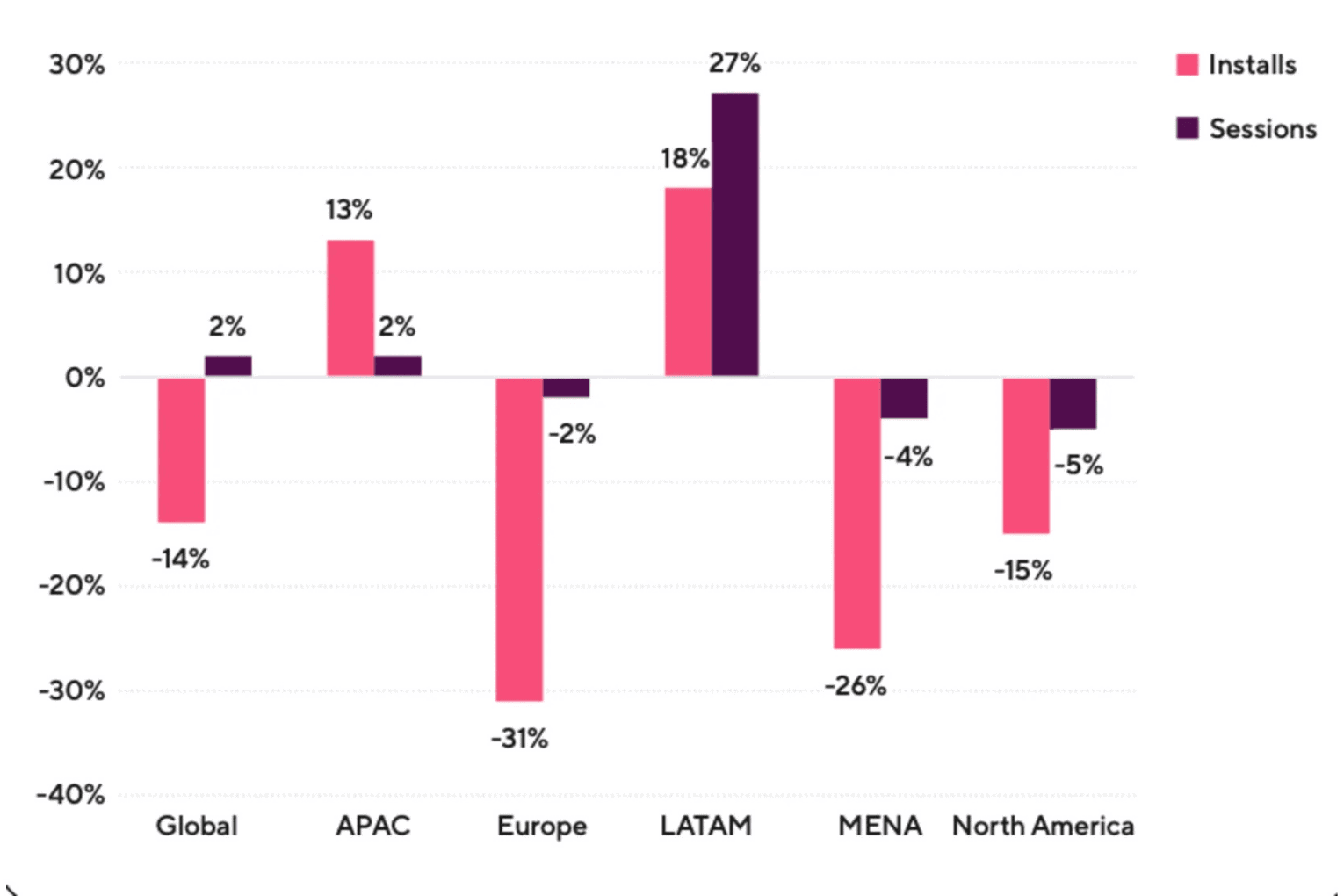
The first half of 2025 has presented a mixed picture for the global e-commerce sector on mobile platforms. According to Adjust’s “Shopping App Insights Report: 2025 Edition,” e-commerce app installs dropped by 14% globally compared to the previous year, while user sessions rose by 2%. These contrasting figures suggest that acquiring new users is becoming increasingly difficult, yet engagement among existing users continues to grow.

The first half of 2025 has presented a mixed picture for the global e-commerce sector on mobile platforms. According to Adjust’s “Shopping App Insights Report: 2025 Edition,” e-commerce app installs dropped by 14% globally compared to the previous year, while user sessions rose by 2%. These contrasting figures suggest that acquiring new users is becoming increasingly difficult, yet engagement among existing users continues to grow.
The report predicts that global e-commerce spending will reach $6.42 trillion by the end of 2025, with around $2.5 trillion of that expected to come from mobile commerce. Despite this significant potential, the decline in app installs indicates that the industry is struggling to fully capitalize on mobile growth. For e-commerce brands, this underscores the importance of improving user retention and creating long-term engagement.
LATAM and APAC Show Strong Growth, While North America and Europe Decline
Looking at regional trends, Latin America (LATAM) stands out as a rising star in mobile e-commerce. App installs in LATAM increased by 18%, while user sessions surged by an impressive 27%. This growth highlights the region’s rapid digital adoption and untapped market potential.
The Asia-Pacific (APAC) region also recorded steady growth, with installs up by 13% and sessions increasing by 2%. In contrast, mature markets like North America and Europe faced declines. In North America, app installs dropped by 15% and sessions by 5%, while Europe and the MENA region saw similar downward trends.
These findings suggest that e-commerce businesses must reassess their regional strategies and focus more on high-growth markets to remain competitive in the evolving digital landscape.