
HepsiJET General Manager Atilla Alver: “Logistics Is No Longer Just Delivery, but End-to-End Experience Management”

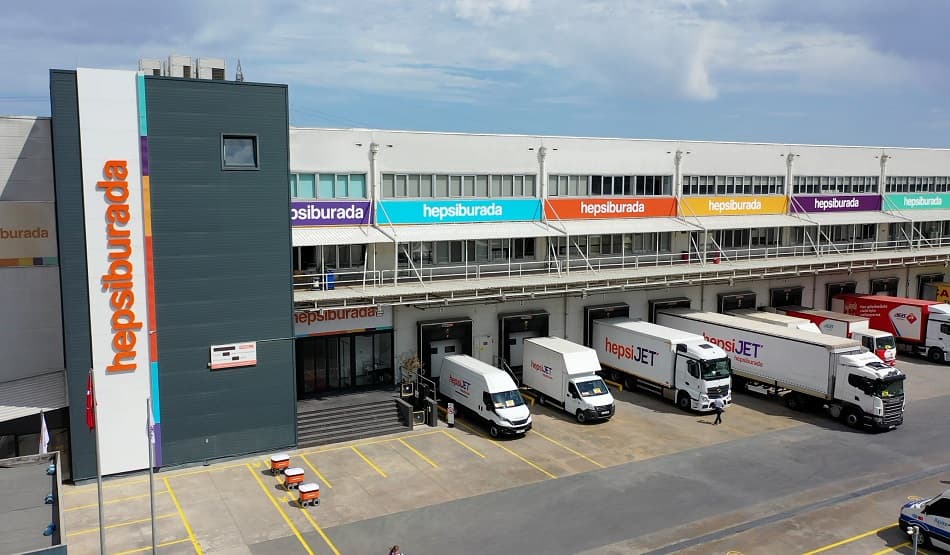
The scale that e-commerce has reached in Türkiye is transforming the logistics sector from merely a transportation operation into a strategic structure reshaped around technology, data analytics, and customer experience. In this new era, where consumers’ expectations for speed, transparency, and flexibility are increasing day by day, logistics companies are now positioned not only as companies that deliver, but also as technology companies that manage digital transformation, increase operational efficiency, and build customer loyalty. (HepsiJET)
Operation networks spread across all corners of Türkiye, artificial intelligence-supported route optimization systems, real-time tracking technologies, and sustainability-focused investments are determining the sector’s new competitive dynamics. In particular, applications such as same-day delivery, scheduled delivery, and personalized delivery experiences play a critical role in the customer satisfaction strategies of e-commerce brands. In addition, technologies that reduce carbon emissions, electric vehicle investments, and data-driven operation management are among the key topics shaping the future of the logistics world.
As one of the notable players in this transformation, HepsiJET is creating a different positioning in the Türkiye logistics ecosystem with its technology-centered approach. With its operation network spanning 81 provinces, advanced automation infrastructure, artificial intelligence-supported systems, and service model focused on customer experience, the company aims to build the future of logistics today. At the same time, it is becoming one of the important actors of operational transformation not only with its own ecosystem, but also with the integrated logistics solutions it offers to brands from different sectors.
HepsiJET General Manager Atilla Alver spoke to WORLDEF E-COMMERCE about the company’s technology vision, the impact of artificial intelligence and data analytics on operations, the innovations that HepsiJET XL and PRO services bring to the sector, the prominent trends in e-commerce logistics, and the company’s future growth strategies.
How do you define your vision as a company? How do you see your role in Türkiye’s logistics and e-commerce sectors?
As e-commerce grows in Türkiye, consumers’ expectations are also changing to the same extent. Türkiye’s strategic location, developing digital trade volume, and young technology ecosystem present us with an important opportunity in the logistics sector. Based on this transformation, we define our vision as being a technology-focused player that places data at the center and redefines customer expectations.
Today, our strong operational infrastructure, which extends to all 81 provinces, is based on a widespread organizational structure consisting of more than 5,000 carriers, more than 50 owned vehicles, 24 transfer centers, and 250 branches. We stand out with the solutions we offer, from same-day and scheduled delivery to return processes, from cash-on-delivery shipments to XL transportation.
In addition, we also respond to the necessary needs in the sector with our activities focused on B2B transportation. At this point, we are the solution partner of both Hepsiburada and many brands from different sectors outside Hepsiburada. Especially in recent years, the increase in the share of our customers outside Hepsiburada within our total transportation volume shows that our service model has found a response. (HepsiJET)
How would you define your technological capabilities as HepsiJET? How do you evaluate the effects of technology on both customer experience and operational efficiency?
Logistics has evolved from static operation processes into a dynamic ecosystem that works with real-time data. We view technology not merely as an element that supports logistics, but as the fundamental building block at the center of our business model. We use data analytics, artificial intelligence-supported optimization systems, and real-time tracking technologies at every stage of our business processes. For example, thanks to our TÜRKPATENT-approved Multi-Vehicle Route Optimization application, we develop artificial intelligence-supported smart logistics solutions and systematically reduce the carbon footprint in our operations.
Thanks to our systems that analyze customer feedback end to end, we transform large data sets into meaningful insights and continuously improve our service quality with real-time feedback. We implement a similar approach in address management as well. Thanks to our artificial intelligence-supported address classification technologies, we achieve significant gains by increasing delivery accuracy. (HepsiJET)
When we look at the customer experience side, applications such as live tracking systems, scheduled delivery, Sunday delivery, address change, date postponement, and return at the door enable users to manage the delivery process in a more controlled and predictable way. Because today’s consumer expects to have control over the entire process and for this process to be completed transparently. We use technology precisely to respond to these expectations.
At the same time, thanks to the automation systems we use in our transfer centers, we increase our daily capacity while minimizing error rates. One of the most concrete examples of this is our Kıraç Transfer Center. Our facility, which operates in a closed area of 4,500 square meters, is our first operation center that uses Singulator and Cross-Belt Sorter technologies together. Thanks to its daily processing capacity of 500,000 packages, we can manage processes much faster and with a lower error rate.
Could you tell us a little about the advantages offered by HepsiJET XL and PRO services? What makes these services different from other logistics solutions in the sector?
HepsiJET XL and HepsiJET PRO are among the most innovative examples showing that logistics has now gone beyond standard transportation organization. When we look at the HepsiJET XL side, in white goods, furniture, or large electronic products, consumers expect the process to be completed smoothly, in a planned manner, and reliably. Here, we differentiate ourselves with our operational planning capability. When necessary, we activate delivery processes supported by elevators or cranes, offering customers a safer and more controlled experience, especially at points that are difficult to access. In addition, our XL shipments reach our customers in a much shorter time, below the sector’s average delivery times.
When we detail HepsiJET PRO, today, as HepsiJET, we have gone far beyond being a structure that only serves our own ecosystem. Thanks to our capabilities, we now have the capacity to manage the logistics processes of retail brands from different sectors end to end. HepsiJET PRO, positioned within this scope, also stands out as a comprehensive logistics model for brands and businesses. We provide an integrated structure extending from transfers between warehouses to store replenishment, from return management to full supply chain management. (HepsiJET)
This model, which can be scaled according to companies’ own operational needs, reduces brands’ own fleet and operation burden. In this way, all delivery processes in the B2B world can be met within an integrated structure, regardless of whether they are internal or intercompany. At the point we have reached today, HepsiJET PRO has become a strategic business partner model that adapts to the growth pace of companies.
Considering the current developments in the sector, what do you think are the most important trends in logistics and e-commerce?
According to the latest Türkiye E-Commerce Outlook Report announced by the Ministry of Trade, the e-commerce volume in our country increased by 52.2 percent in 2025 compared to the previous year, exceeding 4.57 trillion Turkish liras. The number of transactions was realized as 5 billion 940 million. This picture clearly reveals the scale that digital trade has reached in Türkiye and the pace of transformation in the sector.
This strong momentum in the field of e-commerce is moving logistics toward a more technology-focused structure. Today, systems that can quickly adapt to customer expectations are setting the new standards of the sector. For example, innovations that will keep up with trends such as same-day delivery, delivery within a specific time window, or weekend delivery can only be implemented by strongly digitalizing and reading data correctly.
Another critical topic is sustainability. The logistics processes that grow with the rise of e-commerce create a serious environmental burden in terms of carbon emissions, energy consumption, and waste production. In this sense, electric vehicle investments, route optimization, and technologies that reduce carbon emissions will be key elements in the future of the sector.
In addition, forecasting systems supported by artificial intelligence and data analytics are becoming increasingly important. As in every field, artificial intelligence provides great benefits in logistics as well, if used properly. Structures that can predict demand intensity during campaign periods and optimize operation capacity in real time will create a significant competitive advantage. In summary, we foresee that logistics companies will transform into structures that develop technology, manage customer experience, and offer end-to-end solutions in the coming period.
What are HepsiJET’s short- and long-term goals? What kind of strategies do you plan to follow while achieving these goals?
Among our priorities are further improving our service quality, growing our operational capacity, and increasing our business partnerships in different sectors. Expanding the innovations we provide to our customers outside Hepsiburada is an important growth area for us. In the long term, we aim to make HepsiJET one of Türkiye’s strongest technology-based logistics platforms. In line with this, we will continue to increase our automation investments, data-driven management, and sustainable logistics practices. We also continue to develop new delivery models that place customer experience at the center.
Because in the future, the factor that will make a difference in logistics will be the ability to offer a personalized and uninterrupted experience. With our Data Kokpit project, whose development processes are currently ongoing, we will be able to monitor field operations much more closely with real-time data flow. Thus, we will have the opportunity to make faster decisions, intervene instantly, and achieve higher efficiency. In addition, we see environmental sustainability as an inseparable part of our transformation. While we plan to grow our existing electric vehicle fleet, which exceeds 125 vehicles, we resolutely continue our efforts to reduce the distance traveled and the related carbon emissions through technology-supported management.