
ChatGPT Traffic Underperforms Google in E-commerce Study
New research analysing 973 e-commerce websites with combined annual revenues of about US$20 billion finds that referral traffic from ChatGPT significantly underperforms that from Google Search in conversion rates and revenue per session.

ChatGPT Traffic Underperforms Google Search in E-Commerce
New research analysing 973 e-commerce websites with combined annual revenues of about US$20 billion finds that referral traffic from ChatGPT significantly underperforms that from Google Search in conversion rates and revenue per session. The study was published on 24 October 2025 by marketing intelligence site PPC Land.
The analysis, conducted by researchers at the University of Hamburg and the Frankfurt School of Finance & Management, covered data from August 2024 through July 2025. The dataset included over 50 000 transactions from ChatGPT referrals, and 164 million transactions originating from traditional channels. ChatGPT Traffic
Key Findings
-
ChatGPT-driven traffic accounted for less than 0.2 % of all sessions in the dataset.
-
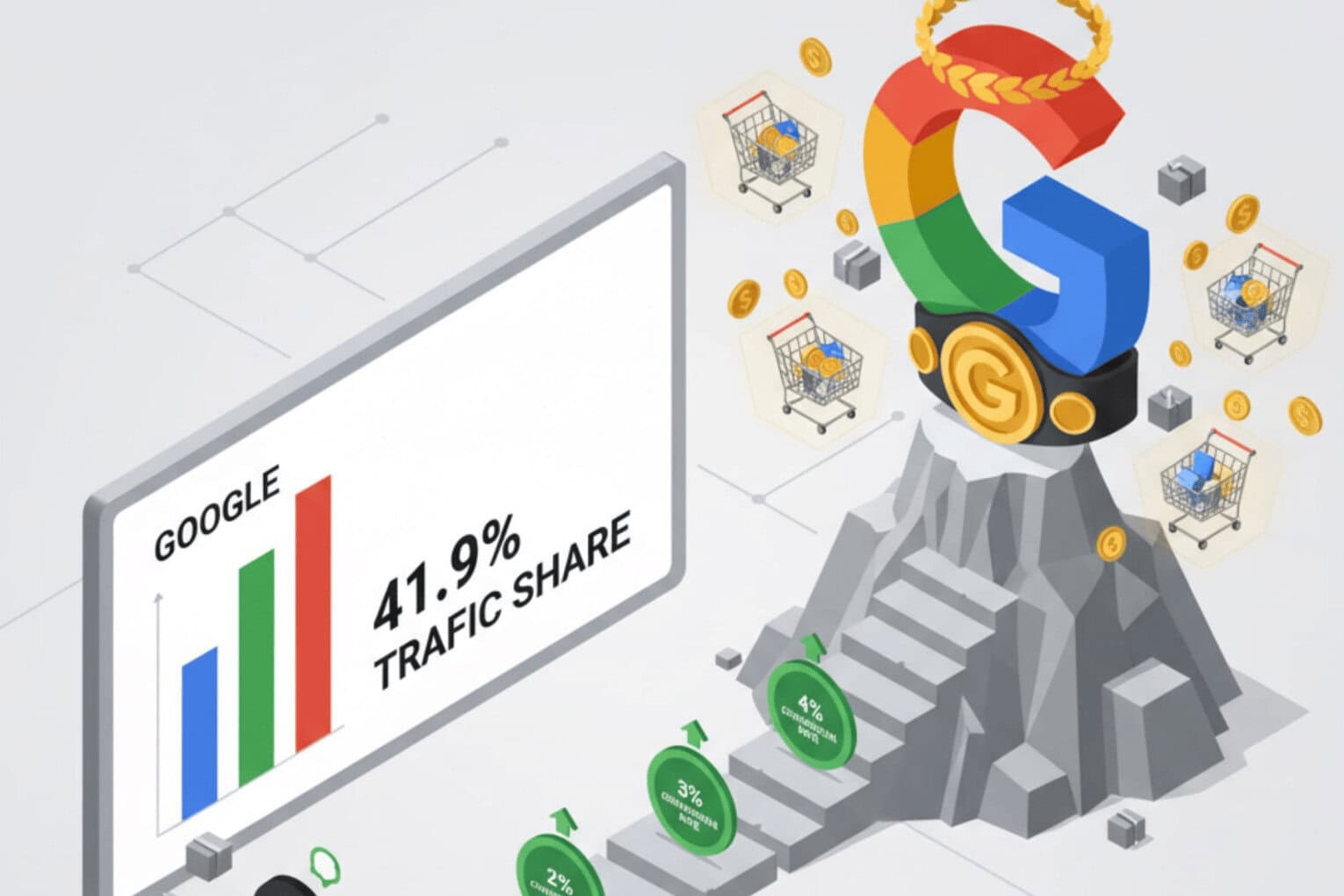
Organic search traffic from Google captured roughly 41.9 % of sessions.
-
Conversion rates for ChatGPT referrals were the lowest among major channels only outperforming paid social media in this respect. In contrast, organic search out-performed ChatGPT by approximately 13 points.
-
Revenue per session for ChatGPT also trailed significantly behind direct traffic, paid search, email and organic search channels.
-
On the positive side, bounce rates for ChatGPT referrals were lower compared with many channels, suggesting that although ChatGPT traffic volume is small, the users who arrive engage with content rather than drop immediately.
Interpreting the Gap
While ChatGPT’s growth in users and AI-driven discovery has generated excitement, this study suggests that high volume does not immediately translate into high value for e-commerce conversion. Several factors may explain the performance gap:
-
User intent differs: Traffic from Google search often represents users actively seeking products or services, while ChatGPT users may be at the exploratory or research phase rather than ready to purchase. PPC Land
-
Shopping infrastructure is still emerging: The referral architecture from AI platforms into e-commerce sites may not yet offer the same seamless experience—features like deep-linking, up-to-date catalogues and purchase funnels are less mature.
-
Attribution limitations: Standard last-click attribution models may undervalue the role ChatGPT plays in earlier stages of the customer journey, potentially under-reporting its contribution. The study’s authors highlighted this limitation. PPC Land
Strategic Implications for E-commerce Businesses
For retailers, agencies and marketing teams, the findings suggest caution in assuming that AI-powered referral traffic will instantly replace traditional search or channels with proven conversion strength. Key take-aways include:
-
Maintain investment in high-conversion channels like organic search, email and paid search while experimenting with AI referral optimisation.
-
Refine content and technical infrastructure to support AI discovery: ensure product metadata is structured, inventory links from AI tools are accurate, mobile-experience is optimised and landing pages cater to conversational traffic.
-
Develop multi-touch attribution frameworks to capture the full value of AI-based referrals, especially for brand-awareness and early-funnel activity.
-
Monitor trend changes: the study observed gradually improving conversion rates from ChatGPT over the 12-month period — suggesting that AI-driven e-commerce performance may improve over time with platform maturity. PPC Land
Outlook
The gap between ChatGPT referrals and search-based traffic is expected to narrow gradually if:
-
AI platforms enhance commerce-specific features (checkout integration, product catalogues, deep-linking).
-
Consumer behaviour evolves such that users move from discovery via AI to conversion within the same session.
-
E-commerce sites and marketers adapt to the new traffic source by optimising experience for conversational interface referrals.
However, the research projects that parity with organic search is unlikely within the next year under current conditions. PPC Land
Conclusion
While ChatGPT offers new possibilities for discovery and engagement, this latest study underscores that traffic volume alone does not guarantee business outcomes. For now, traditional search remains the dominant driver of e-commerce conversion and revenue. Businesses should view AI referrals as a supplementary channel—capable of growth, but not yet a replacement for established traffic sources. ChatGPT Traffic