
Dubai Launches AI Immigration Corridor
Dubai International Airport (DXB), one of the world’s busiest aviation hubs, has unveiled a groundbreaking innovation in passenger processing: an AI-powered smart immigration corridor known as the “Red Carpet.”

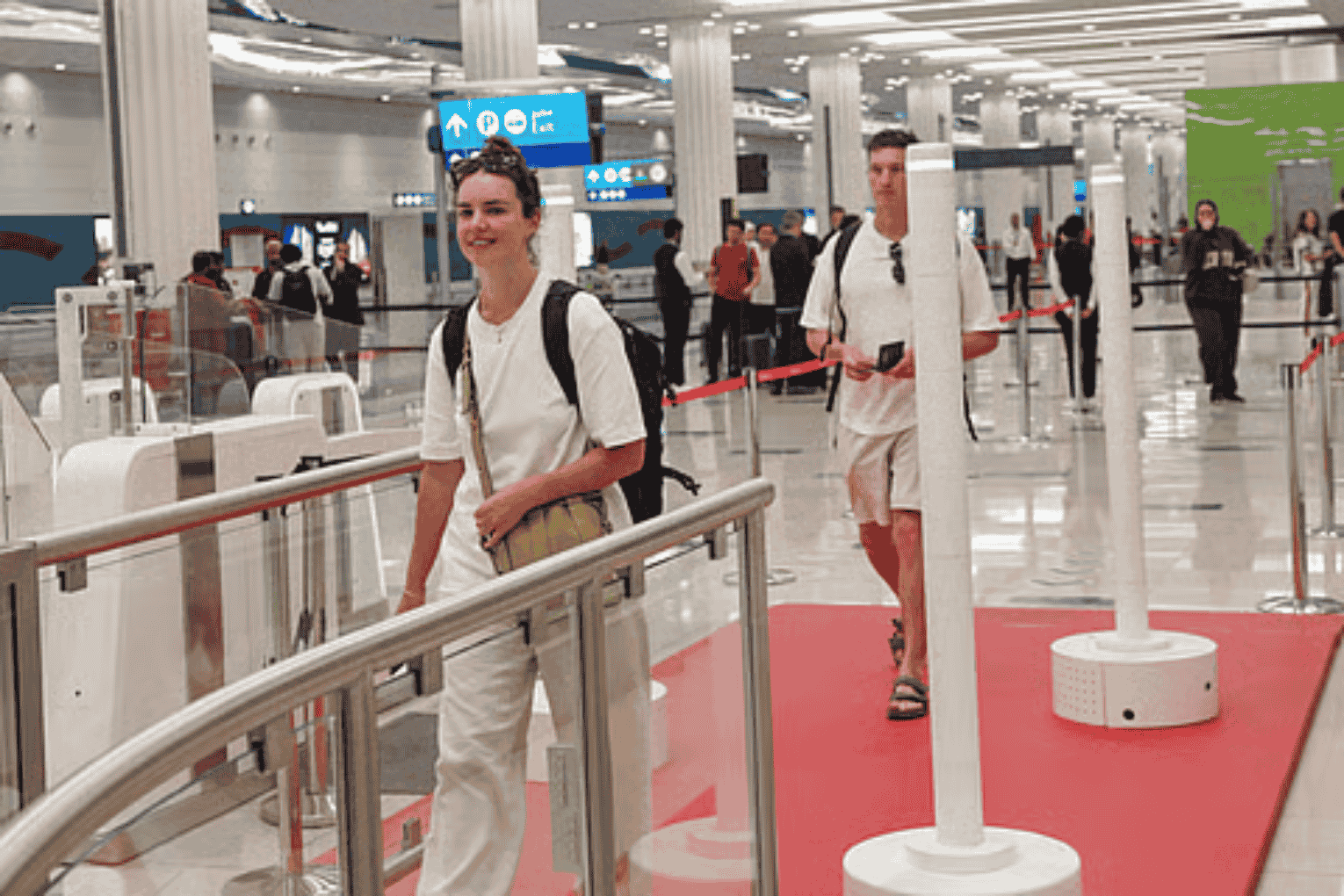
Dubai International Airport (DXB), one of the world’s busiest aviation hubs, has unveiled a groundbreaking innovation in passenger processing: an AI-powered smart immigration corridor known as the “Red Carpet.” Deployed at Terminal 3, this system enables eligible passengers to pass through immigration in seconds without the need to present passports or boarding passes.
Developed in collaboration with the General Directorate of Residency and Foreigners Affairs (GDRFA) and Dubai Airports, the Red Carpet corridor is currently being used for selected outbound travellers. Authorities have announced plans to expand the system to arriving passengers, positioning DXB at the forefront of airport innovation.
According to airport officials, the corridor can identify travellers in just six to fourteen seconds using facial recognition and AI algorithms. It eliminates the need for physical documentation and human interaction during passport control.
This initiative aligns with Dubai’s wider vision to transform the travel experience through cutting-edge technology, reduce congestion, and increase security, speed, and passenger satisfaction.
Khaleej Times – September 2025
A First of Its Kind in the World
The Red Carpet corridor is being hailed as a global first in terms of its operational model. Unlike traditional immigration counters or even e-gates, this smart corridor allows passengers to walk through without stopping. High-resolution facial recognition cameras scan and verify identities in real time, using databases maintained by immigration authorities.
The system is capable of processing up to 10 people simultaneously and is designed to accommodate families or travel groups moving together. Officials report that the new system is already reducing wait times and improving traffic flow at peak travel periods.
According to Major General Obaid Muhair bin Suroor, Deputy Director General of GDRFA, the system represents a major shift in how airports can handle immigration securely while offering a seamless experience.
How the System Works
Passengers eligible for the corridor must have their biometric data already registered with the UAE immigration system—either through a previous visit, residency status, or Emirates ID. Here’s how the process works:
-
As passengers approach the corridor, facial recognition cameras scan their features.
-
Artificial intelligence software verifies the traveller’s identity against official government records.
-
If approved, the passenger continues walking without any interruption.
-
If the system flags any irregularities, immigration officers are alerted for further inspection.
There are no physical barriers or document checks. The traveller’s journey through immigration becomes completely contactless.
This is part of a growing global trend to create frictionless travel experiences by removing paper-based documentation and replacing it with biometric data and AI validation.
Time Efficiency and Operational Benefits
Traditional immigration processes can take several minutes per passenger. With the Red Carpet corridor, clearance times have dropped to under 15 seconds. This results in significant improvements in passenger throughput, especially during busy travel seasons like Eid, Christmas, or summer holidays.
Operationally, this also reduces the strain on airport immigration officers, allowing them to focus on complex or exceptional cases instead of routine passport stamping.
Dubai Airports expects the corridor to become an essential tool in managing increasing passenger volumes in the years ahead. In 2024 alone, DXB handled over 90 million passengers, maintaining its position as the world’s busiest airport for international travellers.
Source: Airports Council International 2024 Passenger Traffic Rankings
Strategic Alignment with UAE’s AI Vision
The Red Carpet project supports the UAE’s national Artificial Intelligence Strategy 2031, which aims to make the country a global leader in AI implementation across all sectors, including aviation and public services.
The airport already offers several other smart services:
-
Biometric check-in and boarding
-
Real-time flight tracking via mobile apps
-
Contactless payment and duty-free purchases
-
AI-driven security surveillance and analytics
By adding AI-powered immigration clearance to this list, DXB is advancing toward the goal of becoming a fully autonomous airport ecosystem.
Source: UAE Government Portal – AI Strategy 2031
Security and Privacy Considerations
While the new system brings speed and convenience, it also raises important questions about privacy and data protection. Authorities have stated that the biometric data used in the Red Carpet corridor is encrypted and stored securely, and all procedures comply with UAE privacy laws and international security standards.
Nonetheless, experts argue that transparency around data handling policies will be critical to maintaining public trust, especially as such systems become more widespread.
Additionally, backup protocols are in place for scenarios where the system fails or manual verification becomes necessary.
Expansion and Future Developments
As of September 2025, the system is available only to a select group of outbound passengers using Terminal 3, which primarily serves Emirates Airlines. However, the next phase will extend the service to arriving passengers, as well as more departure gates within the terminal.
Longer-term plans include integration with Terminal 1 and 2, and even rollout to Dubai’s second airport, Al Maktoum International (DWC), which is set to become the world’s largest airport by capacity in the coming decades.
Dubai also aims to offer this technology to other government agencies and possibly license it for use at other international airports in the Gulf region and beyond.
Global Comparisons
While other airports such as Changi (Singapore), Schiphol (Amsterdam), and Incheon (South Korea) have begun using biometric screening and smart gates, Dubai’s system is unique in its ability to allow free, uninterrupted walking through the corridor without physical checks.
It is also among the few systems in the world capable of simultaneously processing multiple individuals in a single pass-through corridor, making it more efficient for families and group travellers.
This puts DXB in a strong position to influence the future direction of global aviation security and smart border management.
Industry Impact
The success of the Red Carpet corridor is likely to have ripple effects across the aviation industry. Key potential impacts include:
-
Increased adoption of biometric technologies at international airports
-
Shift in immigration staffing models and training needs
-
Greater focus on cybersecurity in border management systems
-
Enhanced demand for smart infrastructure investments in travel hubs
It may also influence policy decisions, particularly around visa issuance, passenger data management, and airport design.
Conclusion
Dubai’s launch of the Red Carpet smart corridor marks a significant milestone in global aviation. By fusing biometric identity verification with artificial intelligence, the emirate is redefining how passengers interact with borders.
As the system expands to more travellers and terminals, it promises to enhance the airport experience, improve security, and set a global benchmark for the future of travel. Dubai once again proves its leadership in digital innovation and its vision of becoming not just a transport hub, but a technology hub.
As global travel rebounds and passenger expectations evolve, smart systems like the Red Carpet corridor will be vital to ensuring airports remain efficient, secure, and customer-centric.