
AI Could Cause Global Job Loss Within Five Years
Artificial Intelligence (AI) technologies have been advancing rapidly in recent years, raising serious concerns about the future of the global workforce.

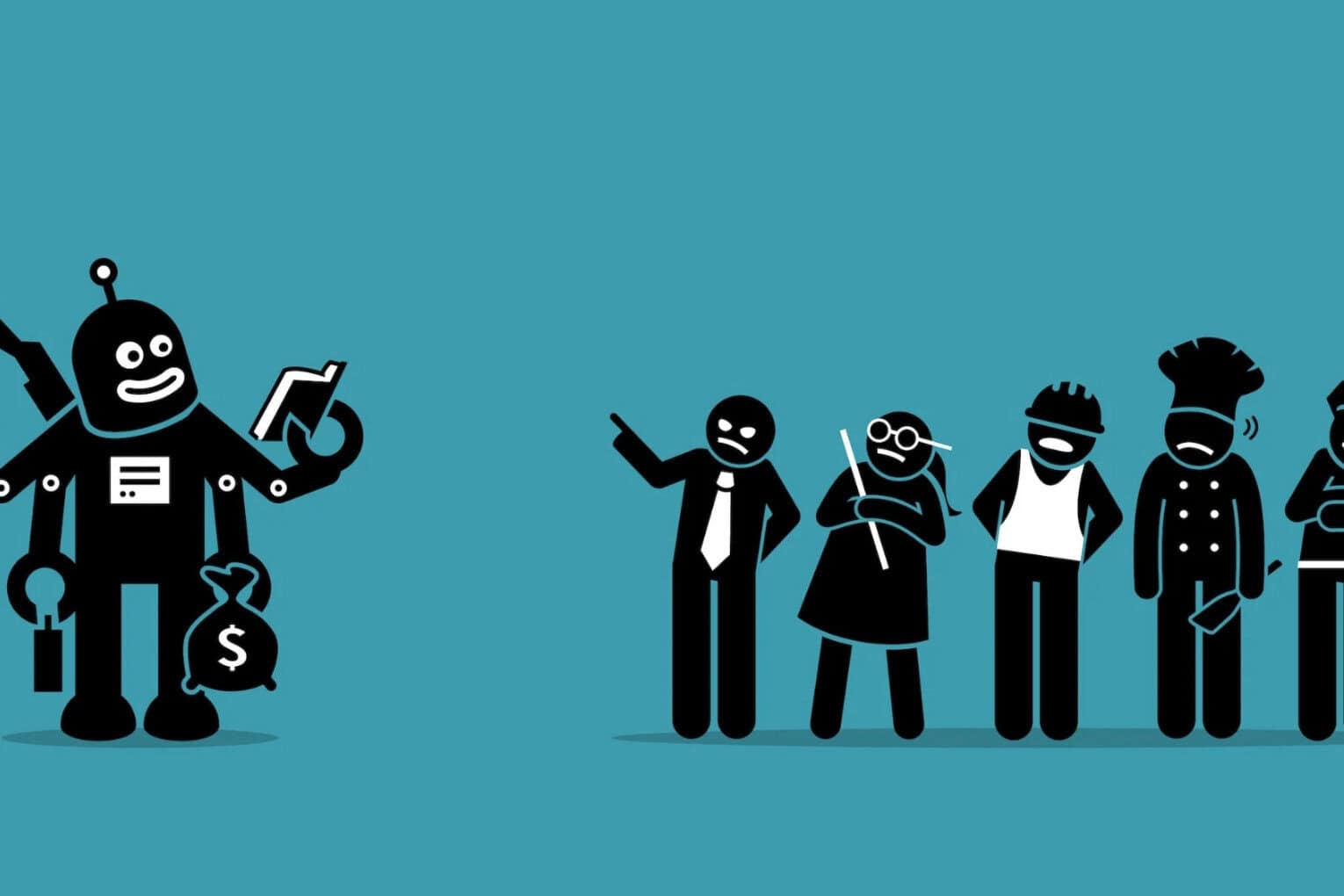
Artificial Intelligence (AI) technologies have been advancing rapidly in recent years, raising serious concerns about the future of the global workforce. Roman Yampolskiy, Professor of Computer Science at the University of Louisville, recently stated on “The Diary of a CEO” podcast that Dubai Holding Launches Dubai Retail Brand for 40+ DestinationsAI could leave up to 99 percent of the global workforce unemployed by 2030 (Entrepreneur). Yampolskiy predicts that Artificial General Intelligence (AGI) systems could reach human-level capabilities by 2027, which could cause a significant collapse in labor markets.
According to Yampolskiy, AI could provide trillions of dollars worth of free labor, significantly reducing companies’ need for human employees. This development could affect not only unemployment rates but also economic stability, social structures, and political systems worldwide.
Potential Impact on the Workforce
Yampolskiy foresees that almost all computer-based jobs could be automated by AGI. Humanoid robots could increasingly replace physical labor tasks, resulting in unprecedented levels of unemployment. Remaining roles may be largely limited to creative and specialized tasks that humans are uniquely capable of performing.
Other experts in the field share similar warnings. Geoffrey Hinton, often called the father of AI, recently stated that AI could quickly replace white-collar intellectual work, leaving millions of professionals unemployed globally. Dario Amodei, CEO of Anthropic, estimates that AI could eliminate up to half of entry-level white-collar jobs within 1 to 5 years, potentially increasing unemployment rates to 20 percent.
Industries Most at Risk
The impact of AI is expected to vary across different sectors:
-
Finance: Automation in data analysis, reporting, and client advisory services.
-
Manufacturing: Robotics and AI-driven production lines replacing repetitive assembly tasks.
-
Healthcare: Administrative roles, diagnostics, and certain medical procedures may become automated.
-
Customer Service: Chatbots and AI assistants handling growing volumes of inquiries.
-
Retail: Automated checkout systems, inventory management, and AI-driven marketing strategies.
-
Transportation and Logistics: Autonomous vehicles and AI-powered route optimization could replace drivers and coordinators.
-
Education: AI tutoring systems and grading tools may reduce the need for traditional teaching roles in certain contexts.
These changes could reshape economies and lead to major transformations in labor markets.
Global Reports and Predictions
According to the World Economic Forum’s 2024 Future of Jobs Report, AI and automation could displace more than 300 million jobs globally within the next five years if no mitigation strategies are implemented. IMF analyses suggest that economies reliant on routine work could face unemployment spikes of up to 15 percent if the workforce fails to adapt quickly. OECD studies indicate that even highly skilled workers may require continuous retraining to remain competitive in AI-driven labor markets.
Education and Reskilling
Yampolskiy warns that existing reskilling programs may be insufficient to address the speed and scale of AI adoption. Governments and companies will need to implement large-scale retraining initiatives and consider alternatives such as universal basic income or flexible work models to mitigate social and economic impact (Entrepreneur).
Experts emphasize that education systems must urgently focus on creativity, critical thinking, and AI oversight skills. This approach is essential to prepare future generations for jobs that AI cannot replace.
Economic and Social Implications
AI-driven unemployment could exacerbate income inequality and social tensions. Millions of people losing access to stable income may affect consumer demand, social cohesion, and political stability. Economists warn that without proactive planning, AI could deepen existing divides between countries and within societies.
At the same time, AI also creates new opportunities. Emerging fields such as AI system management, ethical compliance, robotics maintenance, and creative industries are expected to expand. The challenge lies in balancing technological progress with the protection of human employment.
Expert Recommendations
Experts suggest a multi-faceted approach to mitigate risks:
-
Proactive Government Policy: Regulate AI development and deployment while protecting workers.
-
Corporate Responsibility: Provide retraining and reskilling programs for employees impacted by automation.
-
Ethical AI Development: Ensure AI systems do not increase inequality or unfairly displace workers.
-
Global Collaboration: Countries should share best practices to manage labor market transitions effectively.
Long-Term Scenarios
Looking ahead, several potential scenarios are anticipated:
-
Rapid Displacement: AI replaces a large portion of the workforce, leading to economic instability.
-
Hybrid Workforce: Humans and AI work together, with AI handling repetitive tasks and humans focusing on creative and supervisory roles.
-
Balanced Transition: Policy interventions, education reform, and retraining programs allow society to adapt gradually, minimizing negative effects.
Conclusion
AI development promises significant technological progress but also poses serious challenges for the global workforce. Experts like Yampolskiy, Hinton, and Amodei warn that mass job displacement could occur within the next five years if proactive measures are not taken. Governments, companies, and educational institutions must act swiftly to ensure AI benefits society without leaving millions behind (Entrepreneur).