
The Store Is Not Dead. It Just Has a New Job

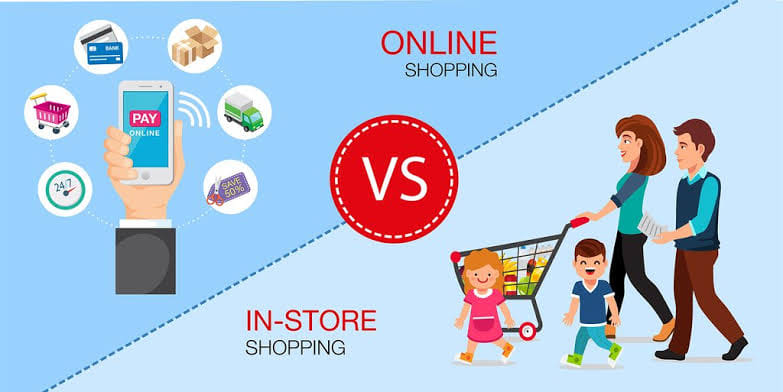
For more than a decade, retail has been framed as a simple competition, physical stores versus E-commerce.
One side was supposed to win. The other was supposed to disappear.
I increasingly believe that this framework is outdated.
The physical store is not surviving despite e-commerce. In many cases, it is becoming more valuable due to e-commerce.
Recent research published in Harvard Business Review offers a useful explanation. Researchers Ayşe Çetinel, Gürhan Kök, and Robert Rooderkerk examined physical store openings by an online-first, multi-brand electronics retailer and found that stores should not be judged solely by the revenue generated within their walls.
That sounds obvious. Yet many retailers still manage stores and E-commerce as separate businesses.
Stop Thinking in Channels
Retail organizations often have separate teams, targets, and P&Ls for stores and E-commerce.
The online team wants digital revenue to grow. The store team wants physical revenue to grow. Each side protects its own numbers.
Customers do not behave this way.
A consumer may discover a product on social media, compare it online, visit a store to see it, order it through an app, and return it in person.
For the customer, this is one journey.
For many retailers, it is still several departments.
The HBR study demonstrates the problem well. After three physical stores opened, nearby online net revenue initially declined by around 8% to 11%. Yet two large, experience-led stores increased total net revenue across channels by 21.7% and 23.2%. A smaller convenience-oriented store cannibalized online sales without producing meaningful overall growth.
The lesson is important: Cannibalizing your own channel is not necessarily a problem. Failing to increase total customer value is.
The Store Needs a New Job
Historically, stores existed because that was where transactions happened. Digital commerce changed that permanently.
If customers already know what they want, can order it in seconds and receive it quickly, a store that merely recreates an online catalog on shelves has limited strategic value. A modern store needs to solve something that digital cannot solve as well.
Research identifies three particularly important functions: helping consumers evaluate products, offering immediate fulfillment, and making returns or post-purchase problems easier to resolve.
I would go slightly further.
The store of the future is not simply a sales channel. It can simultaneously become a service center, fulfillment node, trust mechanism, showroom, and experience platform.
This matters particularly in furniture, beauty, electronics, luxury, eyewear and premium fashion, where touch, fit, scale, performance or expert advice can still materially change a purchasing decision.
These categories will not become less digital. Their digital journeys will become more sophisticated, while physical interaction remains valuable at specific moments.
Not Every Store Deserves to Survive
This argument should not be interpreted as a call to open more stores indiscriminately.
A bad store does not become strategically valuable simply because we describe it as omnichannel.
Even within the successful stores studied by the researchers, more than four in ten product categories produced no measurable uplift. Some benefited strongly from physical presence; others did not.
Retailers, therefore, need to become much more selective.
Televisions may justify demonstration zones. Furniture may need complete room settings. Beauty requires trial and consultation. Accessories may simply perform better when connected to destination products.
The question should not be: “How do we make every store more experiential?”
It should be: “Where does physical experience genuinely change the customer’s decision?”
The difference is enormous.
One creates expensive retail concepts. The other creates productive retail.
The Store Is Also Becoming Infrastructure
Physical stores increasingly have another role: fulfillment.
A location may support online orders, shorten delivery distances, hold inventory closer to customers, enable pickup, and simplify returns.
Once this happens, measuring the store only through its own sales becomes even less meaningful.
This is particularly important as fulfillment speed, inventory visibility and last-mile economics become central competitive factors in E-commerce.
Amazon taught the industry that logistics is part of the customer experience.
Omnichannel retailers are now discovering that the store itself can become part of logistics.
AI Makes the Question More Interesting
Artificial intelligence will make online shopping dramatically more efficient.
Search will become conversational. Recommendations will become deeply personalized. AI agents may increasingly compare products, identify the best offers, and eventually make some purchasing decisions for consumers.
And that creates an interesting paradox.
The more efficient digital commerce becomes, the more valuable physical presence may become in the moments when people still want judgment, reassurance, discovery, or sensory confirmation.
Routine transactions will continue migrating online.
Physical retail will increasingly concentrate on the moments where presence actually adds value.
That is not the store’s decline. It is specialization.
What Retailers Are Actually Looking For
We can already see this transition in the conversations retailers themselves are initiating.
Ahead of WORLDEF Prime Antalya, which will bring the retail and E-commerce ecosystem together on December 8–10, participating Hosted Retailers have been asked to identify the solutions and capabilities they are actively looking for before arriving.
The pattern is revealing.
Among the verified Hosted Retailer applications, 62% are looking for data, analytics, and AI solutions, 60% for commerce platforms, 45% for marketing solutions, 36% for web and mobile experience technologies, and 28% for CRM and customer-experience solutions. The participants also span logistics and fulfillment, digital product, technology infrastructure, and other functions that increasingly connect physical and digital retail.
To me, this is more interesting than simply saying retailers are “investing in digital.”
What they are really trying to build is an operating system in which channels no longer function independently.
That is also why the Hosted Retailers format at WORLDEF Prime Antalya is structured around declared business needs rather than random networking. Retail decision-makers specify their priorities in advance, and meetings are matched to actual requirements and relevant solutions.
The important point is not the event itself.
It is what these requirements tell us about where retail is going.
Retailers are no longer asking whether they should be physical or digital. They are trying to understand how AI, data, fulfilment, commerce technology and stores fit into one customer journey.
There Is Only Commerce
The biggest challenge may therefore no longer be technological.
Most large retailers already have websites, apps, CRM systems, digital payments and increasingly advanced logistics.
The deeper challenge is organizational.
If physical teams are rewarded for store revenue while digital teams are rewarded for online revenue, both sides will naturally defend their channels.
Research instead suggests evaluating performance through total net revenue, customer acquisition, purchase frequency, retention and returns across the whole customer relationship.
This is where retail needs to go next.
We should stop talking about E-commerce and physical retail as two competing worlds.
There is only commerce. The customer has already understood this. Retail organizations are the ones still catching up.
The winners of the next decade will not necessarily be those with the most stores or even those with the strongest E-commerce platforms.
They will be the companies that understand when digital convenience creates value, when physical presence creates value and how to connect the two without caring which channel receives credit for the transaction.
The store is not dead.
It simply has a much more demanding job description now.