
Surprise in the E-Commerce Moratorium: 23 Countries Reached an Agreement Among Themselves!

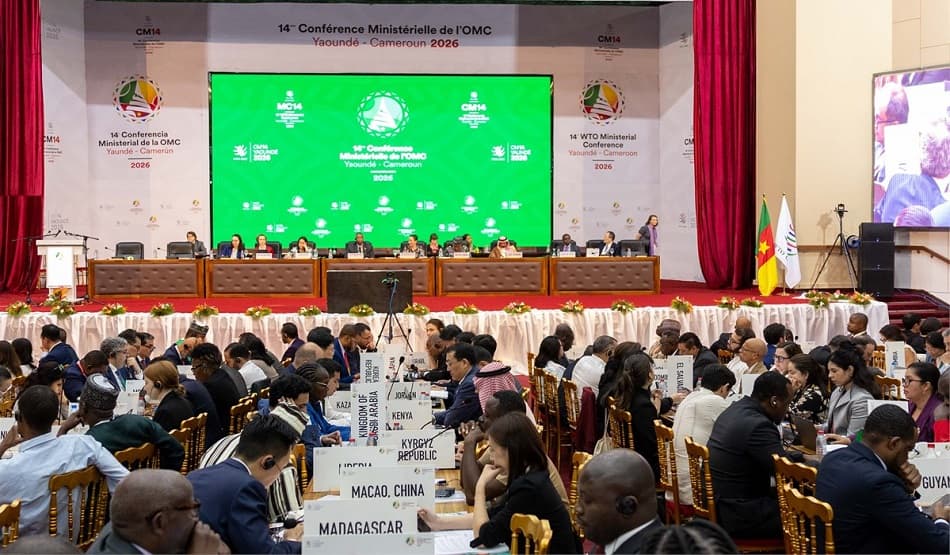
After World Trade Organization (WTO) members failed to reach an agreement on extending the long-standing e-commerce moratorium, a group of countries agreed among themselves not to impose e-commerce customs duties.
Days of talks were held among trade ministers of WTO member countries in Yaounde, the capital of Cameroon. The meeting broke up on Monday after Brazil and Türkiye blocked the attempt to extend the WTO e-commerce moratorium, which had been in place for 28 years.
23 Countries Signed the Agreement
According to a document seen on Thursday, a group of WTO member countries agreed among themselves not to impose e-commerce customs duties. The 23 countries that signed the e-commerce moratorium agreement included countries such as the United States, the United Kingdom, Japan, and Mexico. The WTO has 166 members, and consensus is required to conclude global negotiations.
The issue is expected to be raised again by the broader membership at a meeting to be held in Geneva in early May. It is still not clear whether any country has already introduced new duties that could apply to digital downloads and streaming services.
What Is the WTO E-Commerce Moratorium, and Why Does It Matter?
The e-commerce moratorium is a global agreement among World Trade Organization (WTO) members that prohibits customs duties on electronic transmissions such as digital downloads and streaming. This policy was established during the WTO’s Second Ministerial Conference held in Geneva in 1998 in order to promote digital trade.
It covers cross-border transmissions such as software downloads, e-books, music and movie streaming, and video games. The e-commerce moratorium, which was initially temporary, was renewed approximately every two years. It was most recently extended for two years at the 13th conference held in 2024. The e-commerce moratorium expired on March 31, 2026, when the 14th WTO Ministerial Conference held this month in Yaounde, Cameroon, came to an end.
Supporters of the extension, including major digital economies such as the United States, the European Union, Canada, and Japan, argue that it provides stability for global digital trade and protects businesses from new duties that could increase costs. More than 200 global business organizations called for the extension of the moratorium. They warned that its end would increase costs and hinder cross-border e-commerce.
Brazil and Türkiye Opposed the Moratorium
Some developing countries, including Türkiye, India, and Brazil, opposed the extension. These countries argue that the e-commerce moratorium prevents them from obtaining customs revenue necessary for infrastructure and from addressing the digital divide. Research points to significant potential revenue losses for these countries; however, some studies show that these losses could be offset by other forms of taxation.
At the last conference, four proposals regarding the moratorium were presented: the African, Caribbean and Pacific Group requested a temporary extension, while the United States sought a permanent extension. Other groups proposed both permanent extensions and the establishment of committees on digital trade.
Differences over the period for which the moratorium could be extended caused the 14th Ministerial Conference in Yaounde to remain inconclusive. The driver of the idea of longer extensions beyond two years was the United States, which sought a permanent extension. Later in the negotiations, it reduced this demand to four years. Other members were willing to move along with the United States, but Brazil and Türkiye held their ground for only a two-year extension, which has been the norm since the moratorium was first imposed in 1998.
Deadlock Over the E-Commerce Moratorium in WTO Talks
The WTO’s 14th Ministerial Conference, which began on March 26 in Yaounde, the capital of Cameroon, ended on Monday, March 30, with an “e-commerce deadlock.” At the conference, talks were held among trade representatives and high-level officials from approximately 166 countries. Tense negotiations were conducted for four days.
Brazil objected to the e-commerce decision in protest over issues stemming from a separate debate related to agriculture. The e-commerce agreement was blocked at the last minute by Brazil. The United States had sought a permanent extension of the moratorium on taxes in such transactions, while Brazil requested an agreement for it to continue for only four more years.
WTO Director-General Ngozi Okonjo-Iweala also said that the United States and Brazil in particular “need more time” to resolve their disagreements over imposing duties on cross-border online orders.
A U.S. official, commenting on the talks, said, “This is not the United States versus Brazil. This is Brazil and Türkiye versus 164 members.” Brazil, meanwhile, accused Washington of “wanting the sky.”
E-Commerce Tariffs Will Be Discussed in Geneva
WTO representatives said that the talks will continue at the headquarters in Geneva until at least May. International Chamber of Commerce Secretary General John Denton said that failure to reach an agreement on e-commerce tariffs at the meeting “risks further increasing policy uncertainty at exactly the wrong time for the real economy.”
Denton said, “Now, a determined effort must be made to restart the talks in Geneva without delay. Reinstating the WTO’s e-commerce moratorium should be an urgent priority. Exposing digital services, one of the few drivers of global growth, to the threat of customs duty barriers makes no sense at all in an already fragile economic environment.”
India Backtracks: ‘We Are Open to a Longer Moratorium in E-Commerce’
Meanwhile, in a significant strategic reversal, India announced at the WTO that it is open to extending the moratorium on e-commerce taxation beyond the standard two-year period.
As part of this change in stance, India said at the World Trade Organization (WTO) that it is ready to consider extending the moratorium on taxation of cross-border electronic transmissions beyond the traditional two years, citing the need to provide predictability to businesses.
Commerce and Industry Minister Piyush Goyal said, “India’s stand was that we should look at a little longer period so that businesses can plan their business activities for a longer period. This is still under discussion among various countries, and will be finalized in the next one or two months in Geneva.”
India had been expressing the view that the moratorium in place since 1998 should not be extended. This position was also reiterated at the WTO General Council meeting held in December 2025. The e-commerce moratorium expired on March 31, 2026.